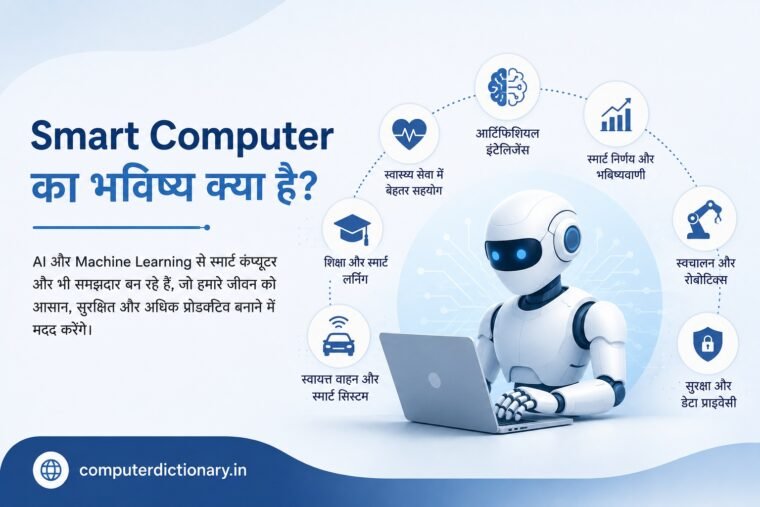
Computer technology लगातार बदल रही है। कभी computer का उपयोग मुख्य रूप से calculations करने, documents बनाने और data store करने के लिए किया जाता था। इसके बाद internet, smartphones, cloud computing और mobile applications ने computers के उपयोग को पूरी तरह बदल दिया।
अब computer technology एक नए दौर में प्रवेश कर रही है, जहाँ computers केवल दिए गए instructions को execute करने तक सीमित नहीं हैं। Artificial Intelligence (AI) और Machine Learning (ML) जैसी technologies की मदद से computer systems data का analysis कर सकते हैं, patterns पहचान सकते हैं, recommendations दे सकते हैं और कुछ परिस्थितियों में उपलब्ध information के आधार पर decisions लेने में सहायता कर सकते हैं।
ऐसे intelligent computing systems को सामान्य रूप से Smart Computer की अवधारणा से समझा जा सकता है।
आज smart computing के उदाहरण हमारे आसपास मौजूद हैं। Smartphone के virtual assistants, recommendation systems, image recognition, speech recognition, intelligent security systems और autonomous technologies इसी दिशा में हो रहे विकास के उदाहरण हैं।
जैसे-जैसे Artificial Intelligence और Machine Learning आगे बढ़ रहे हैं, computers की capabilities भी तेजी से विकसित हो रही हैं।
ऐसे में सवाल उठता है—Smart Computer क्या है, यह कैसे काम करता है और भविष्य में Smart Computer हमारी दुनिया को किस प्रकार बदल सकता है?
आइए विस्तार से समझते हैं।
Table of Contents
Smart Computer क्या है?
Smart Computer का भविष्य क्या है? AI और Machine Learning कैसे बदलेंगे कंप्यूटर की दुनिया
Smart Computer ऐसा computing system है जो Artificial Intelligence, Machine Learning और संबंधित technologies का उपयोग करके data का analysis, patterns की पहचान, prediction, recommendation या intelligent automation जैसे कार्य कर सकता है।
Traditional computer सामान्यतः predefined instructions और programs के अनुसार काम करता है।
उदाहरण के लिए यदि किसी software में कोई निश्चित calculation करने का program लिखा गया है, तो computer उसी predefined logic के अनुसार result देगा।
Smart computing systems में data और intelligent algorithms का उपयोग करके अधिक adaptive behavior प्राप्त किया जा सकता है।
ऐसे systems बड़ी मात्रा में data process करके patterns पहचान सकते हैं और उन्हीं patterns के आधार पर useful output तैयार कर सकते हैं।
Smart Computer का उपयोग:
- Image Recognition
- Speech Recognition
- Natural Language Processing
- Recommendation Systems
- Predictive Analytics
- Automation
- Robotics
- Autonomous Systems
जैसे अनेक क्षेत्रों में किया जा सकता है।
Smart Computer को आसान उदाहरण से समझें
मान लीजिए एक सामान्य computer program को केवल यह instruction दिया गया है कि किसी student के marks के आधार पर pass या fail बताना है।
Program में condition हो सकती है कि 40 या उससे अधिक marks होने पर student pass होगा।
यह predefined rule के अनुसार काम करने वाला traditional program है।
अब मान लीजिए हमारे पास एक intelligent system है जिसे हजारों students का historical data दिया जाता है।
System उस data में patterns खोज सकता है और उपलब्ध variables के आधार पर अनुमान लगाने का प्रयास कर सकता है कि किन students को किसी विषय में अतिरिक्त सहायता की आवश्यकता हो सकती है।
यहाँ system केवल एक simple fixed rule पर निर्भर नहीं है, बल्कि data patterns का उपयोग कर रहा है।
यही basic concept smart computing और Machine Learning को समझने में मदद करता है।
Smart Computer कैसे काम करता है?
Smart Computer के काम करने का तरीका उसके application पर निर्भर करता है, लेकिन सामान्य रूप से इसमें कुछ महत्वपूर्ण stages शामिल हो सकती हैं।
1. Data Collection
सबसे पहले system को relevant data की आवश्यकता होती है।
यह data अलग-अलग sources से प्राप्त हो सकता है, जैसे:
- Sensors
- Cameras
- Microphones
- Databases
- User interactions
- Business systems
- Connected devices
2. Data Processing
Raw data को सीधे इस्तेमाल करना हमेशा संभव नहीं होता।
इसलिए system data को organize, filter या preprocess कर सकता है ताकि algorithms के लिए उसे उपयोगी बनाया जा सके।
3. Pattern Recognition
Machine Learning algorithms data में मौजूद patterns और relationships पहचानने का प्रयास कर सकते हैं।
उदाहरण के लिए image recognition system बहुत सारी images के आधार पर visual patterns सीख सकता है।
4. Prediction या Recommendation
Learned patterns के आधार पर system नए data पर prediction या recommendation दे सकता है।
5. Output या Action
अंत में system result user को दिखा सकता है या configured application के अनुसार कोई automated action initiate कर सकता है।
सरल रूप में इसे इस तरह समझ सकते हैं:
Data → Processing → AI/ML Analysis → Pattern Recognition → Prediction/Decision Support → Output
Smart Computer और Artificial Intelligence का संबंध
Smart computers के विकास में Artificial Intelligence (AI) की बहुत महत्वपूर्ण भूमिका है।
Artificial Intelligence computer science का एक व्यापक क्षेत्र है जिसका उद्देश्य ऐसी computational techniques विकसित करना है जो perception, language processing, reasoning, planning, pattern recognition और decision-support जैसे tasks कर सकें।
AI के applications में शामिल हो सकते हैं:
- Voice assistants
- Chatbots
- Computer vision
- Recommendation systems
- Language processing
- Robotics
- Intelligent automation
Smart computer systems इन्हीं AI capabilities का उपयोग करके traditional computing की तुलना में अधिक intelligent functions प्रदान कर सकते हैं।
Machine Learning की भूमिका
Machine Learning (ML) Artificial Intelligence से संबंधित एक महत्वपूर्ण field है।
Machine Learning में computer models data से patterns सीखते हैं और उन patterns के आधार पर नए data पर predictions या classifications कर सकते हैं।
उदाहरण के लिए email spam detection system को बहुत सारे spam और legitimate emails के examples से train किया जा सकता है।
Training के बाद model नए emails के patterns को देखकर अनुमान लगा सकता है कि email spam है या नहीं।
Smart computers के भविष्य में Machine Learning की भूमिका महत्वपूर्ण रहेगी क्योंकि अधिक intelligent systems data-driven models पर आधारित हो सकते हैं।
Deep Learning क्या भूमिका निभाता है?
Deep Learning, Machine Learning से संबंधित एक approach है जिसमें multi-layer neural networks का उपयोग किया जाता है।
Deep Learning ने विशेष रूप से:
- Image recognition
- Speech recognition
- Natural language processing
- Computer vision
जैसे क्षेत्रों में महत्वपूर्ण प्रगति को सक्षम किया है।
Smart computer systems में complex data जैसे images, audio और text को process करने के लिए deep learning techniques का उपयोग किया जा सकता है।
Natural Language Processing क्या है?
Natural Language Processing (NLP) AI का वह क्षेत्र है जो computers को human language के साथ computational तरीके से काम करने में सक्षम बनाने पर केंद्रित है।
NLP के applications में शामिल हैं:
- Chatbots
- Language translation
- Text summarization
- Search
- Voice assistants
- Question answering
- Sentiment analysis
भविष्य के smart computers में NLP बहुत महत्वपूर्ण हो सकता है क्योंकि इससे users computer systems के साथ अधिक natural language में interaction कर सकते हैं।
Smart Computer और Voice Recognition
पहले computers को operate करने के लिए keyboard और mouse मुख्य input devices थे।
आज voice-based interaction भी तेजी से बढ़ रहा है।
Speech recognition technology spoken words को computer-readable information में convert करने में मदद करती है।
AI और NLP के साथ मिलकर voice systems user की commands को समझने और appropriate response देने का प्रयास कर सकते हैं।
भविष्य में voice interfaces computers के साथ interaction को और सहज बना सकते हैं।
Computer Vision और Smart Computer
Computer Vision AI का वह क्षेत्र है जिसमें computers images और video से useful information निकालने का प्रयास करते हैं।
Computer Vision का उपयोग:
- Object detection
- Image classification
- Manufacturing inspection
- Document processing
- Robotics
- Autonomous systems
जैसे क्षेत्रों में किया जा सकता है।
Smart computers के भविष्य में visual information को समझने और process करने की capability महत्वपूर्ण भूमिका निभा सकती है।
Smart Computer का भविष्य
AI और Machine Learning में तेजी से हो रही प्रगति के कारण smart computers का भविष्य कई क्षेत्रों में महत्वपूर्ण बदलाव ला सकता है।
आइए कुछ प्रमुख संभावनाओं को समझते हैं।
1. अधिक Personalized Computing
भविष्य के smart computer systems users की preferences और usage patterns के आधार पर अधिक personalized experience प्रदान कर सकते हैं।
आज recommendation systems इसका शुरुआती उदाहरण हैं।
Streaming platforms, shopping platforms और content applications user activity के आधार पर recommendations प्रदान कर सकते हैं।
भविष्य में computers:
- Personalized interface
- Personalized recommendations
- Customized learning content
- Context-aware assistance
- User-specific productivity suggestions
जैसी सुविधाएं अधिक प्रभावी रूप से प्रदान कर सकते हैं।
इससे हर user का computing experience उसकी आवश्यकता के अनुसार अधिक customized हो सकता है।
2. Smart Computer और Healthcare
Healthcare smart computing के महत्वपूर्ण application areas में से एक हो सकता है।
AI-based systems medical data के analysis में professionals की सहायता कर सकते हैं।
इनका उपयोग संभावित रूप से:
- Medical image analysis
- Clinical data analysis
- Pattern detection
- Administrative automation
- Research
- Decision-support
जैसे कार्यों में किया जा सकता है।
भविष्य में smart computing healthcare professionals को बड़ी मात्रा में information को process करने में सहायता कर सकती है।
हालांकि healthcare जैसे high-stakes क्षेत्र में अंतिम medical decisions qualified professionals द्वारा उचित clinical context में ही किए जाने चाहिए।
3. Autonomous Systems का विकास
Smart computers autonomous systems के लिए महत्वपूर्ण हैं।
Autonomous system ऐसा system है जो sensors से information प्राप्त करके environment को analyse कर सकता है और configured goals तथा constraints के आधार पर actions चुन सकता है।
इसके उदाहरणों में शामिल हो सकते हैं:
- Autonomous vehicles
- Drones
- Robots
- Industrial automation
- Warehouse systems
ऐसे systems cameras, sensors और अन्य data sources से लगातार information प्राप्त करते हैं।
Smart computing systems इस information को process करके real-time operation में सहायता करते हैं।
4. Self-Driving Vehicles
Self-driving vehicles smart computing के सबसे चर्चित applications में से एक हैं।
Autonomous vehicle को आसपास के environment से लगातार data प्राप्त करना होता है।
इसके लिए cameras, radar, lidar और अन्य sensors का उपयोग system design के अनुसार किया जा सकता है।
Computer system को:
- Road environment समझना
- Objects detect करना
- Lane information process करना
- Other vehicles को identify करना
- Pedestrians detect करना
- Safe path planning में सहायता करना
जैसे complex tasks करने पड़ सकते हैं।
यह smart computing के real-time applications का महत्वपूर्ण उदाहरण है।
5. Smart Robots
भविष्य में robots केवल fixed repetitive tasks तक सीमित नहीं रहेंगे।
AI, Computer Vision और sensor technologies के विकास से robots अधिक complex environments में काम करने में सक्षम हो सकते हैं।
Smart robots का उपयोग:
- Manufacturing
- Warehousing
- Agriculture
- Research
- Hazardous environments
- Logistics
जैसे क्षेत्रों में बढ़ सकता है।
6. Education में Smart Computer
Education में smart computing personalized learning के लिए उपयोगी हो सकती है।
AI-based educational systems student की learning activity के आधार पर:
- Practice questions recommend कर सकते हैं
- Learning gaps identify करने में सहायता कर सकते हैं
- Difficulty level adjust कर सकते हैं
- Explanations उपलब्ध करा सकते हैं
- Learning progress analyse कर सकते हैं
इससे traditional one-size-fits-all learning model के साथ personalized digital assistance जोड़ी जा सकती है।
हालांकि teachers और human guidance की भूमिका महत्वपूर्ण बनी रहेगी।
7. Smart Virtual Assistants
Virtual assistants smart computing का एक प्रमुख उदाहरण हैं।
भविष्य के assistants context को बेहतर तरीके से समझने, complex instructions process करने और अलग-अलग applications के साथ अधिक useful तरीके से interact करने में सक्षम हो सकते हैं।
Users natural language में कह सकते हैं:
“मेरे आज के जरूरी tasks बताओ।”
या
“इस document का summary तैयार करो।”
ऐसे interfaces computer usage को अधिक conversational बना सकते हैं।
8. Manufacturing में Smart Computers
Manufacturing industry में smart computers automation और optimization के लिए उपयोग किए जा सकते हैं।
AI-based systems production data का analysis करके:
- Quality inspection
- Equipment monitoring
- Demand forecasting
- Process optimization
- Predictive maintenance
जैसे tasks में सहायता कर सकते हैं।
उदाहरण के लिए sensors से प्राप्त machine data के patterns के आधार पर system संभावित equipment problems की पहचान में मदद कर सकता है।
9. Predictive Maintenance
Traditional maintenance में machine खराब होने के बाद repair की आवश्यकता पड़ सकती है या fixed schedule पर servicing की जाती है।
Predictive maintenance में sensors और historical data के analysis के आधार पर potential failures का अनुमान लगाने का प्रयास किया जाता है।
इससे companies को:
- Unexpected downtime कम करने
- Maintenance planning बेहतर करने
- Equipment utilization सुधारने
में मदद मिल सकती है।
10. Logistics और Supply Chain
Smart computers logistics और supply chain management में भी महत्वपूर्ण भूमिका निभा सकते हैं।
AI systems:
- Delivery routes optimize करने
- Inventory demand estimate करने
- Warehouse operations manage करने
- Supply chain data analyse करने
में सहायता कर सकते हैं।
Real-time data analysis businesses को operational decisions लेने में मदद कर सकता है।
11. Agriculture में Smart Computing
Agriculture में sensors, drones, satellite data और AI का combination smart farming में उपयोग किया जा सकता है।
Smart systems:
- Crop monitoring
- Soil data analysis
- Irrigation planning
- Pest detection
- Yield estimation
जैसे tasks में सहायता कर सकते हैं।
इससे farmers और agricultural professionals को data-driven information प्राप्त हो सकती है।
12. Smart Homes
Smart home technology भी smart computing का practical application है।
Connected devices के माध्यम से:
- Lighting
- Security
- Temperature
- Appliances
- Energy usage
को monitor और automate किया जा सकता है।
AI-based systems user preferences के अनुसार कुछ settings automatically adjust करने में भी सक्षम हो सकते हैं।
13. Cybersecurity में Smart Computers
Cybersecurity में बहुत बड़ी मात्रा में network और system data analyse करना पड़ता है।
AI और Machine Learning tools suspicious patterns detect करने और security teams को potential threats prioritize करने में सहायता कर सकते हैं।
Smart security systems:
- Unusual network activity
- Suspicious login behavior
- Malware-related patterns
- Fraud indicators
जैसी activities की पहचान में उपयोग किए जा सकते हैं।
लेकिन AI का उपयोग attackers द्वारा भी किया जा सकता है, इसलिए cybersecurity में intelligent defensive technologies का विकास भी महत्वपूर्ण रहेगा।
14. Business Decision Making
Businesses रोजाना बड़ी मात्रा में data generate करते हैं।
Smart computing systems इस data का analysis करके:
- Sales trends
- Customer behavior
- Inventory
- Operational performance
- Market patterns
से संबंधित insights प्रदान कर सकते हैं।
इससे managers को data-driven decision making में सहायता मिल सकती है।
15. Smart Computer और Creativity
AI-based computing systems text, images, audio और अन्य digital content के साथ भी काम कर सकते हैं।
इनका उपयोग:
- Drafting
- Brainstorming
- Design assistance
- Image generation
- Video workflows
- Music-related experimentation
जैसे creative tasks में किया जा सकता है।
भविष्य में human creativity और AI-based tools का combination कई professional workflows को बदल सकता है।
Smart Computers के फायदे
Smart computers के कई संभावित लाभ हैं।
तेज Data Analysis
Computers बड़ी मात्रा में data को humans की तुलना में बहुत तेजी से process कर सकते हैं।
Automation
Repetitive tasks automate किए जा सकते हैं।
Pattern Recognition
AI models complex datasets में useful patterns पहचानने में सहायता कर सकते हैं।
Personalized Experience
Users को उनकी preferences के आधार पर customized recommendations और services मिल सकती हैं।
Productivity
Routine tasks में automation से professionals अपना समय अधिक complex work पर लगा सकते हैं।
Real-Time Insights
कुछ systems sensor और operational data का real-time analysis कर सकते हैं।
Decision Support
Smart systems useful information और predictions प्रदान करके human decision making में सहायता कर सकते हैं।
Smart Computer की चुनौतियाँ
Smart computers के फायदे महत्वपूर्ण हैं, लेकिन इनके साथ कई challenges भी जुड़े हैं।
1. Data Privacy
AI systems को अक्सर बड़ी मात्रा में data की आवश्यकता होती है।
यदि इसमें personal information शामिल है, तो privacy protection महत्वपूर्ण हो जाती है।
Organizations को data collection, storage और usage के लिए उचित privacy practices अपनानी चाहिए।
2. Cybersecurity
Smart systems connected होने के कारण cyber attacks का target बन सकते हैं।
इसलिए:
- Secure authentication
- Encryption
- Access control
- Security updates
- Monitoring
जैसी practices महत्वपूर्ण हैं।
3. Bias
AI model जिस data पर train होता है, उसमें मौजूद bias model के output को प्रभावित कर सकता है।
इसलिए training data की quality, evaluation और responsible deployment महत्वपूर्ण हैं।
4. गलत परिणाम
AI systems हमेशा सही नहीं होते।
Models गलत prediction, classification या generated information दे सकते हैं।
इसलिए high-impact decisions में human verification आवश्यक हो सकती है।
5. Job Displacement
Automation कुछ repetitive jobs और tasks की demand को प्रभावित कर सकती है।
लेकिन technology नए roles और skills की आवश्यकता भी पैदा कर सकती है।
इसलिए future workforce के लिए reskilling और upskilling महत्वपूर्ण होंगे।
6. High Computing Requirements
Advanced AI models को train और operate करने के लिए powerful computing resources की आवश्यकता हो सकती है।
इससे infrastructure cost और energy consumption बढ़ सकता है।
7. Ethical Challenges
Smart computers से जुड़े कुछ महत्वपूर्ण ethical questions हैं:
- Automated decision की responsibility किसकी होगी?
- User data का उपयोग कैसे किया जाएगा?
- AI decisions कितने transparent होने चाहिए?
- Bias को कैसे कम किया जाए?
- Human oversight कहाँ आवश्यक है?
इन सवालों पर technology के विकास के साथ लगातार ध्यान देना आवश्यक होगा।
क्या Smart Computer इंसानों की जगह ले लेंगे?
यह प्रश्न AI और automation के साथ अक्सर पूछा जाता है।
Smart computers कई repetitive, data-intensive और structured tasks को automate कर सकते हैं।
लेकिन इसका अर्थ यह नहीं कि सभी human roles समाप्त हो जाएंगे।
Humans की:
- Creativity
- Social understanding
- Leadership
- Accountability
- Contextual judgment
- Empathy
- Ethical reasoning
जैसी capabilities कई क्षेत्रों में महत्वपूर्ण रहेंगी।
भविष्य में अधिक practical model Human + AI Collaboration हो सकता है, जिसमें smart computers humans की productivity और decision-making को support करें।
Smart Computer और Traditional Computer में अंतर
Traditional और smart computing को सरल तरीके से समझा जा सकता है।
Traditional Computer: मुख्य रूप से predefined programs और instructions के अनुसार tasks execute करता है।
Smart Computer: AI/ML जैसी techniques का उपयोग करके data patterns से predictions, recommendations या adaptive outputs प्रदान कर सकता है।
Traditional software का behavior आमतौर पर explicitly programmed rules पर अधिक निर्भर होता है।
Smart systems में learned models भी system behavior का महत्वपूर्ण हिस्सा हो सकते हैं।
हालांकि वास्तविक modern computer systems में traditional programming और AI दोनों का combination इस्तेमाल किया जाता है।
Smart Computer से जुड़े महत्वपूर्ण Terms
AI – Artificial Intelligence: Intelligent computational capabilities से संबंधित व्यापक field।
ML – Machine Learning: Data से patterns सीखने वाली computational techniques।
Deep Learning: Multi-layer neural networks पर आधारित ML approaches।
NLP – Natural Language Processing: Human language के computational processing से संबंधित field।
Computer Vision: Images और videos से information निकालने की technology।
Automation: Tasks को technology के माध्यम से automatically perform करना।
Predictive Analytics: Historical और current data के आधार पर future outcomes का अनुमान लगाने की techniques।
Autonomous System: ऐसा system जो कुछ परिस्थितियों में limited human intervention के साथ operate कर सके।
Smart Computer: AI और related technologies का उपयोग करने वाला intelligent computing system।
हमारे ब्लॉग पर इस से जुड़े अन्य पोस्ट:
संबंधित उत्पाद:
boAt Wave Call 3 Smartwatch 1.83” HD Display with Animated Watch Faces
अक्सर पूछे जाने वाले प्रश्न – FAQ
Smart Computer क्या है?
Smart Computer ऐसा computing system है जो AI, Machine Learning और related technologies की मदद से data analysis, pattern recognition, prediction, recommendation या automation जैसे intelligent tasks कर सकता है।
Smart Computer कैसे काम करता है?
Smart Computer data collect और process करता है। AI/ML models उस data में patterns identify करके application के अनुसार prediction, recommendation या output प्रदान कर सकते हैं।
Smart Computer में AI का क्या काम है?
AI smart computer को language processing, image recognition, prediction, automation और intelligent interaction जैसी capabilities प्रदान करने में मदद कर सकता है।
Machine Learning क्या है?
Machine Learning ऐसी computational techniques का क्षेत्र है जिसमें models data से patterns सीखकर नए data पर predictions या classifications कर सकते हैं।
Smart Computer का भविष्य क्या है?
भविष्य में smart computers personalized computing, healthcare support, autonomous systems, education, manufacturing, agriculture, cybersecurity और business analytics जैसे क्षेत्रों में अधिक महत्वपूर्ण भूमिका निभा सकते हैं।
Smart Computer कहाँ उपयोग किए जाते हैं?
Smart computing concepts का उपयोग smartphones, recommendation systems, voice assistants, robotics, healthcare applications, autonomous technologies, manufacturing और business analytics जैसे क्षेत्रों में किया जाता है।
Smart Computer के क्या फायदे हैं?
इनके प्रमुख फायदे automation, fast data analysis, pattern recognition, personalized services, productivity improvement और decision support हैं।
Smart Computer के नुकसान क्या हैं?
इनसे data privacy, cybersecurity, bias, गलत outputs, computing cost, ethical issues और कुछ jobs/tasks पर automation के प्रभाव जैसी चुनौतियाँ जुड़ी हैं।
क्या Smart Computer इंसानों की जगह ले सकता है?
Smart computers कुछ tasks automate कर सकते हैं, लेकिन human creativity, judgment, accountability, empathy और social understanding कई क्षेत्रों में महत्वपूर्ण बने रहेंगे।
AI और Smart Computer में क्या अंतर है?
AI एक technology/research field है, जबकि Smart Computer ऐसी computing system की व्यापक अवधारणा है जो AI, Machine Learning और दूसरी intelligent technologies का उपयोग कर सकता है।
निष्कर्ष
Smart Computer का भविष्य Artificial Intelligence, Machine Learning और intelligent automation के विकास से गहराई से जुड़ा हुआ है।
Traditional computers ने information processing और productivity को बदल दिया था। अब smart computing systems data analysis, pattern recognition, language processing, computer vision और automation जैसी capabilities के माध्यम से computing को अधिक adaptive बनाने की दिशा में आगे बढ़ रहे हैं।
भविष्य में smart computers का प्रभाव healthcare, education, autonomous systems, manufacturing, agriculture, cybersecurity, logistics, smart homes और business decision-making जैसे क्षेत्रों में और बढ़ सकता है।
इसके साथ ही privacy, security, bias, गलत AI outputs, employment changes और ethical responsibility जैसी चुनौतियों पर भी ध्यान देना आवश्यक होगा।
Smart computers का उद्देश्य केवल machines को अधिक capable बनाना नहीं होना चाहिए, बल्कि technology का ऐसा responsible उपयोग करना होना चाहिए जिससे humans की productivity, safety और decision-making बेहतर हो सके।
आने वाले वर्षों में computers शायद केवल हमारे commands execute करने वाले devices नहीं रहेंगे। वे increasingly ऐसे intelligent tools बन सकते हैं जो information समझने, patterns पहचानने, recommendations देने और complex workflows में humans की सहायता करने में सक्षम हों।
इसलिए Smart Computer का भविष्य केवल अधिक powerful hardware का भविष्य नहीं है—यह AI, data, automation और human-computer interaction के अधिक intelligent combination का भविष्य है।
