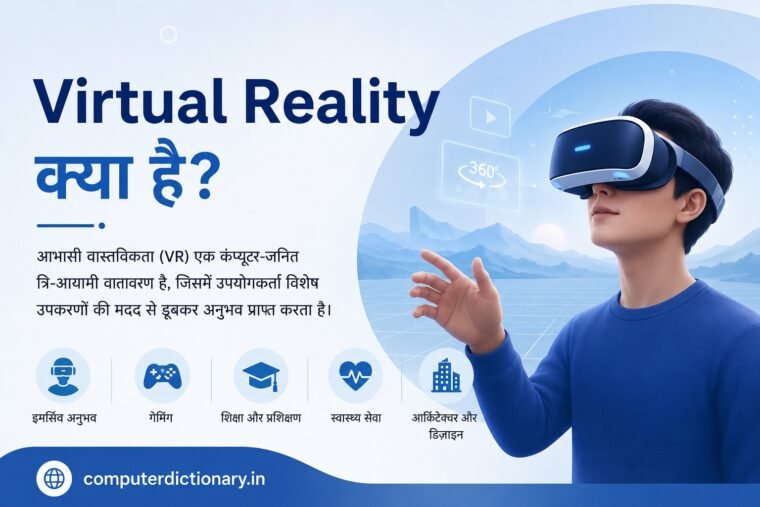
आज technology हमारे वास्तविक और digital संसार के बीच की दूरी लगातार कम कर रही है। Computer, smartphone और internet के बाद ऐसी कई technologies विकसित हुई हैं जो हमें digital content के साथ पहले से कहीं अधिक interactive तरीके से जुड़ने की सुविधा देती हैं। इन्हीं technologies में से एक है Virtual Reality (VR)।
Virtual Reality की मदद से उपयोगकर्ता computer द्वारा बनाए गए एक simulated environment में प्रवेश करने जैसा अनुभव प्राप्त कर सकता है। VR headset पहनने के बाद उपयोगकर्ता केवल किसी digital environment को screen पर नहीं देखता, बल्कि उसे ऐसा महसूस हो सकता है जैसे वह स्वयं उस environment के अंदर मौजूद हो।
आज Virtual Reality का उपयोग केवल gaming तक सीमित नहीं है। इसका इस्तेमाल education, professional training, healthcare, engineering, architecture, entertainment और simulation जैसे अनेक क्षेत्रों में किया जा रहा है।
लेकिन Virtual Reality वास्तव में क्या है? यह कैसे काम करती है? VR headset क्या करता है? VR कितने प्रकार की होती है और Virtual Reality तथा Augmented Reality में क्या अंतर है?
आइए इसे विस्तार से समझते हैं।
Table of Contents
Virtual Reality क्या है? – What is Virtual Reality in Hindi
Virtual Reality क्या है? VR कैसे काम करता है, प्रकार, उपयोग, फायदे और नुकसान
Virtual Reality (VR) एक computer-generated simulated environment है, जिसमें उपयोगकर्ता विशेष hardware जैसे VR headset और controllers की सहायता से digital environment को देख सकता है और उसके साथ interact कर सकता है।
Virtual Reality का मुख्य उद्देश्य उपयोगकर्ता को ऐसा अनुभव देना है जिससे उसे simulated environment में मौजूद होने का एहसास हो।
उदाहरण के लिए, यदि आपने VR headset में समुद्र के अंदर का simulation शुरू किया है, तो headset पहनने के बाद आपको चारों तरफ पानी, समुद्री जीव और underwater environment दिखाई दे सकता है।
आप अपना सिर दाईं तरफ घुमाते हैं तो दृश्य भी उसी दिशा में बदल जाता है। ऊपर देखते हैं तो ऊपर का virtual environment दिखाई देता है।
यही immersive experience Virtual Reality को सामान्य computer screen से अलग बनाता है।
VR का Full Form क्या है?
VR का Full Form – Virtual Reality है।
हिंदी में Virtual Reality को सामान्यतः आभासी वास्तविकता कहा जाता है।
यहाँ:
Virtual का अर्थ है – आभासी या computer द्वारा निर्मित।
Reality का अर्थ है – वास्तविकता।
इस प्रकार Virtual Reality का अर्थ ऐसी computer-generated virtual दुनिया से है जो उपयोगकर्ता को वास्तविक environment जैसा अनुभव प्रदान करने का प्रयास करती है।
Virtual Reality को आसान उदाहरण से समझें
मान लीजिए आपको किसी ऐतिहासिक स्थान को देखना है, लेकिन आप वास्तव में उस स्थान पर नहीं जा सकते।
एक VR application उस स्थान का 3D virtual model तैयार कर सकती है।
जब आप VR headset पहनते हैं, तो आपको ऐसा महसूस हो सकता है कि आप उसी स्थान पर खड़े हैं। आप सिर घुमाकर आसपास देख सकते हैं और application की capabilities के अनुसार virtual objects के साथ interact भी कर सकते हैं।
इसी तरह VR के माध्यम से आप:
- Virtual museum देख सकते हैं
- Simulation में aircraft cockpit अनुभव कर सकते हैं
- Virtual classroom में पढ़ सकते हैं
- 3D game environment में प्रवेश कर सकते हैं
- Training simulation का अभ्यास कर सकते हैं
यही Virtual Reality की सबसे महत्वपूर्ण विशेषता है—Immersion।
Virtual Reality कैसे काम करती है?
Virtual Reality hardware और software के combination से काम करती है।
एक VR system computer-generated 3D environment तैयार करता है और उसे VR headset के displays के माध्यम से उपयोगकर्ता को दिखाता है।
Headset और उससे जुड़े sensors उपयोगकर्ता के movement को track कर सकते हैं।
उदाहरण के लिए, जब आप अपना सिर दाईं ओर घुमाते हैं, तो tracking system इस movement को detect करता है। Software इसके अनुसार virtual scene का viewpoint बदल देता है।
यह process बहुत तेजी से होती है, जिससे उपयोगकर्ता को environment responsive और immersive महसूस होता है।
VR system के operation को सरल रूप में इस प्रकार समझ सकते हैं:
User Movement → Sensors/Tracking → Computer Processing → Updated Virtual Scene → Headset Display
यह प्रक्रिया लगातार दोहराई जाती है।
VR में 3D Environment क्या होता है?
Traditional screen पर दिखाई देने वाली image सामान्यतः एक सीमित rectangular display के अंदर दिखाई देती है।
लेकिन VR में user को ऐसा 3D environment दिखाने का प्रयास किया जाता है जिसमें depth और spatial positioning का अनुभव हो।
VR headset प्रत्येक आंख के लिए थोड़ा अलग perspective प्रस्तुत कर सकता है। इससे brain को depth perception का संकेत मिलता है और virtual objects अधिक three-dimensional महसूस हो सकते हैं।
इसी कारण VR environment में कोई object उपयोगकर्ता के पास या दूर मौजूद दिखाई दे सकता है।
Immersion क्या है?
Virtual Reality को समझने के लिए Immersion एक महत्वपूर्ण शब्द है।
Immersion का अर्थ है किसी digital experience में इतना शामिल महसूस करना कि आपका ध्यान वास्तविक surroundings से हटकर virtual environment पर केंद्रित हो जाए।
VR headset आपके field of view के बड़े हिस्से को virtual scene से भर देता है। Head tracking के कारण scene आपके movement के अनुसार बदलता है।
यदि audio, controllers और motion tracking भी जोड़े जाएं, तो immersion और बढ़ सकता है।
Presence क्या है?
VR के संदर्भ में Presence का अर्थ उपयोगकर्ता को virtual environment के अंदर उपस्थित होने जैसा subjective अनुभव होना है।
उदाहरण के लिए, आप जानते हैं कि आप अपने कमरे में खड़े हैं, लेकिन VR experience के दौरान आपको ऐसा महसूस हो सकता है जैसे आप किसी virtual mountain, building या game world के अंदर मौजूद हैं।
अच्छे VR experience में immersion और presence दोनों महत्वपूर्ण होते हैं।
Virtual Reality के मुख्य Components
एक complete VR system कई hardware और software components से मिलकर बन सकता है।
1. VR Headset
VR headset Virtual Reality system का सबसे पहचानने योग्य component है।
यह उपयोगकर्ता की आंखों के सामने displays और lenses रखता है, जिनके माध्यम से virtual environment दिखाई देता है।
Headset में model के अनुसार sensors, cameras, speakers और tracking hardware भी मौजूद हो सकते हैं।
2. Display
VR headset के अंदर display system virtual images दिखाता है।
Display quality VR experience को प्रभावित कर सकती है। Resolution, refresh rate, field of view और optics जैसे factors महत्वपूर्ण होते हैं।
3. Lenses
Headset में मौजूद lenses displays से आने वाली image को उपयोगकर्ता की आंखों के लिए उपयुक्त तरीके से प्रस्तुत करने में मदद करते हैं।
Optical design VR headset की clarity और field of view पर प्रभाव डाल सकता है।
4. Sensors
VR systems में अलग-अलग sensors का उपयोग user movement detect करने के लिए किया जा सकता है।
इनमें motion और orientation tracking से संबंधित sensors शामिल हो सकते हैं।
5. Controllers
VR controllers उपयोगकर्ता को virtual objects के साथ interact करने की सुविधा देते हैं।
इनसे user:
- Object select कर सकता है
- Virtual items पकड़ सकता है
- Game controls operate कर सकता है
- Menu navigate कर सकता है
- अलग-अलग virtual actions perform कर सकता है
6. Tracking System
Tracking system headset और controllers की position तथा movement का पता लगाता है।
कुछ VR systems headset में लगे cameras का उपयोग करके आसपास के environment और controllers को track करते हैं।
7. Audio
Sound immersion बढ़ाने में महत्वपूर्ण भूमिका निभाता है।
Spatial audio जैसी techniques से user को sound की direction का अनुभव कराया जा सकता है।
उदाहरण के लिए, यदि virtual environment में पीछे से कोई आवाज आती है, तो audio system उसे पीछे की दिशा से आने जैसा प्रस्तुत कर सकता है।
Virtual Reality के प्रकार
Virtual Reality systems को उनकी immersion और interaction capabilities के आधार पर अलग-अलग categories में समझा जा सकता है।
1. Non-Immersive Virtual Reality
Non-immersive VR में user virtual environment को सामान्य computer screen पर देखता है और keyboard, mouse या controller से interact करता है।
इसमें उपयोगकर्ता पूरी तरह virtual environment में immersed नहीं होता।
कुछ computer simulations और 3D virtual environments इसके उदाहरण हो सकते हैं।
2. Semi-Immersive Virtual Reality
Semi-immersive systems में बड़े displays, projection systems या specialized simulation setups का उपयोग किया जा सकता है।
यह non-immersive system की तुलना में अधिक realistic experience प्रदान कर सकता है, लेकिन user पूरी तरह external world से अलग नहीं होता।
Training simulators इसके उदाहरण हो सकते हैं।
3. Fully Immersive Virtual Reality
Fully immersive VR में VR headset, motion tracking, controllers और audio जैसी technologies का उपयोग किया जाता है।
इसका उद्देश्य user को virtual environment में अधिक immersive experience देना होता है।
Modern consumer VR gaming इसी category का प्रमुख उदाहरण है।
Virtual Reality Headset क्या है?
VR Headset एक wearable electronic device है जिसे आंखों के सामने पहना जाता है और जो उपयोगकर्ता को virtual environment दिखाता है।
VR headset में सामान्यतः display, lenses और motion-tracking related hardware होता है।
Advanced models में:
- Cameras
- Built-in audio
- Controllers
- Microphone
- Motion sensors
- Position tracking
जैसी सुविधाएं भी हो सकती हैं।
VR headset के बिना fully immersive Virtual Reality experience प्राप्त करना कठिन है।
Standalone VR Headset क्या है?
कुछ VR headsets को चलाने के लिए अलग powerful computer की आवश्यकता नहीं होती।
ऐसे devices को Standalone VR Headset कहा जाता है।
इनमें processing hardware, storage, operating software और tracking system headset में ही integrated हो सकते हैं।
इनका फायदा portability और comparatively simple setup है।
PC-Based VR क्या है?
कुछ high-performance VR systems powerful computer से connect होकर काम करते हैं।
Computer virtual environment को render करता है और output headset तक भेजता है।
ऐसे systems demanding VR applications और high-quality graphics के लिए उपयोगी हो सकते हैं।
हालांकि इनके लिए compatible computer hardware और setup की आवश्यकता हो सकती है।
Virtual Reality का Gaming में उपयोग
Gaming Virtual Reality के सबसे लोकप्रिय applications में से एक है।
Traditional gaming में player monitor या television पर game देखता है।
VR gaming में player को game environment के अंदर मौजूद होने जैसा अनुभव दिया जा सकता है।
VR controllers की मदद से player:
- Virtual objects उठा सकता है
- Weapons या tools operate कर सकता है
- Puzzle solve कर सकता है
- Virtual world explore कर सकता है
- Game characters और environment से interact कर सकता है
Head tracking gaming experience को और immersive बनाती है।
इसी कारण VR gaming traditional gaming से काफी अलग अनुभव प्रदान कर सकती है।
Education में Virtual Reality का उपयोग
Education में VR की महत्वपूर्ण संभावनाएं हैं।
Students केवल किताब में किसी विषय को पढ़ने के बजाय उसका interactive simulation देख सकते हैं।
उदाहरण के लिए:
Astronomy का student virtual solar system explore कर सकता है।
Biology का student 3D human anatomy देख सकता है।
History का student historical location का virtual reconstruction देख सकता है।
Engineering students complex machines और structures के virtual models समझ सकते हैं।
इस प्रकार VR theoretical concepts को visual और interactive तरीके से प्रस्तुत करने में उपयोगी हो सकती है।
Training में Virtual Reality
Professional training Virtual Reality का एक महत्वपूर्ण application है।
कुछ professions में real-world training महंगी, कठिन या जोखिमपूर्ण हो सकती है।
ऐसी परिस्थितियों में simulation-based training उपयोगी हो सकती है।
उदाहरण के लिए:
Pilot Training
Flight simulation trainees को विभिन्न flight scenarios का अभ्यास करने में मदद कर सकता है।
Medical Training
Medical students और professionals कुछ procedures या anatomy-related simulations का अभ्यास कर सकते हैं।
Industrial Training
Workers virtual environment में machinery, workplace procedures और safety scenarios से परिचित हो सकते हैं।
इसका उद्देश्य वास्तविक environment में जाने से पहले controlled simulation में practice का अवसर देना है।
Healthcare में Virtual Reality
Healthcare में भी Virtual Reality के विभिन्न applications पर काम किया गया है।
VR का उपयोग context और professional supervision के अनुसार:
- Medical education
- Rehabilitation activities
- Procedure simulation
- Pain distraction
- Exposure-based therapeutic applications
जैसे क्षेत्रों में किया जा सकता है।
उदाहरण के लिए कुछ situations में patient का ध्यान discomfort से हटाने के लिए immersive virtual experience का उपयोग किया जा सकता है।
इसी तरह controlled virtual environments कुछ therapeutic approaches में भी उपयोग किए जा सकते हैं।
हालांकि healthcare में VR का इस्तेमाल qualified medical professionals की सलाह और appropriate clinical context के अनुसार होना चाहिए।
Architecture और Real Estate में VR
Architects और designers building बनने से पहले उसका 3D virtual model तैयार कर सकते हैं।
VR की मदद से client virtual building के अंदर घूमकर design को बेहतर तरीके से समझ सकता है।
Real estate में संभावित buyer किसी property का virtual tour देख सकता है।
इससे physical location पर तुरंत जाए बिना property layout का प्रारंभिक अनुभव प्राप्त किया जा सकता है।
Engineering में VR
Engineering और product design में complex systems को visualise करने के लिए VR उपयोगी हो सकती है।
Engineers virtual prototypes देख सकते हैं और design को अलग-अलग angles से examine कर सकते हैं।
इससे physical prototype बनाने से पहले कुछ design issues को समझने में मदद मिल सकती है।
Tourism में Virtual Reality
VR का उपयोग virtual tourism में भी किया जा सकता है।
लोग अपने घर से:
- Museum
- Historical monument
- Tourist destination
- Natural environment
- Cultural location
का virtual experience प्राप्त कर सकते हैं।
यह वास्तविक यात्रा का पूर्ण replacement नहीं है, लेकिन किसी destination को explore करने या उसके बारे में जानने का interactive तरीका हो सकता है।
Virtual Meetings और Collaboration
Virtual Reality remote collaboration के नए तरीकों के लिए भी इस्तेमाल की जा सकती है।
Users virtual meeting spaces में avatars के रूप में interact कर सकते हैं।
3D models और virtual workspaces के साथ collaboration engineering, design और training जैसे क्षेत्रों में उपयोगी हो सकता है।
Virtual Reality और Augmented Reality में अंतर
VR और AR को अक्सर एक जैसा समझ लिया जाता है, लेकिन दोनों अलग technologies हैं।
Virtual Reality – VR
Virtual Reality में user को मुख्य रूप से computer-generated virtual environment में immerse किया जाता है।
VR headset user की वास्तविक surroundings को काफी हद तक replace कर सकता है।
Augmented Reality – AR
Augmented Reality वास्तविक दुनिया को पूरी तरह replace नहीं करती।
इसके बजाय digital objects या information को real-world view के ऊपर overlay किया जाता है।
उदाहरण के लिए smartphone camera के माध्यम से वास्तविक कमरे में virtual furniture दिखाना AR का उदाहरण हो सकता है।
सरल शब्दों में:
VR = Virtual दुनिया में ले जाता है।
AR = वास्तविक दुनिया में digital elements जोड़ता है।
VR और AR का आसान उदाहरण
मान लीजिए आपके सामने एक खाली table है।
यदि headset पहनने के बाद आपको table सहित वास्तविक room दिखाई ही नहीं देता और आप पूरी तरह virtual room में पहुंच जाते हैं, तो यह VR experience हो सकता है।
लेकिन यदि camera या transparent display के माध्यम से आपको वास्तविक table दिखाई देती है और उसके ऊपर एक virtual 3D object दिखाई देता है, तो यह AR experience है।
Virtual Reality के फायदे
Virtual Reality के कई संभावित लाभ हैं।
1. Immersive Experience
VR user को digital environment में deeply involved experience दे सकती है।
2. Interactive Learning
Students complex concepts को interactive 3D environment में समझ सकते हैं।
3. Safe Training
Risky situations को controlled virtual environment में simulate किया जा सकता है।
4. Cost Saving की संभावना
कुछ training scenarios में बार-बार physical setup की आवश्यकता कम हो सकती है।
5. Remote Experience
Users दूर स्थित places या virtual environments को digitally explore कर सकते हैं।
6. Better Visualization
Architecture, engineering और product design में 3D visualization उपयोगी हो सकती है।
7. Entertainment
Gaming, virtual experiences और interactive media के नए forms संभव होते हैं।
Virtual Reality के नुकसान
VR के कई लाभ हैं, लेकिन इसकी कुछ limitations भी हैं।
1. Hardware Cost
High-quality VR hardware और compatible computer महंगे हो सकते हैं।
2. Motion Sickness
कुछ users को VR इस्तेमाल करते समय dizziness, nausea या discomfort महसूस हो सकता है।
इसे सामान्यतः VR motion sickness या cybersickness कहा जाता है।
3. Space Requirement
कुछ room-scale VR experiences के लिए सुरक्षित physical space की आवश्यकता होती है।
4. Eye और Physical Discomfort
लंबे समय तक headset पहनने से कुछ users को eye strain, fatigue या physical discomfort हो सकता है।
5. Powerful Hardware की आवश्यकता
High-end PC VR applications के लिए powerful graphics hardware की जरूरत हो सकती है।
6. Real World Awareness कम होना
Fully immersive headset पहनते समय user आसपास की physical obstacles को ठीक से नहीं देख पाता।
इसलिए safe play area और device safety guidance का पालन करना जरूरी है।
VR इस्तेमाल करते समय किन बातों का ध्यान रखें?
Virtual Reality का उपयोग करते समय basic safety महत्वपूर्ण है।
- आसपास पर्याप्त खाली जगह रखें।
- Furniture और obstacles से दूरी रखें।
- Headset की safety boundary system का उपयोग करें।
- शुरुआत में छोटे sessions रखें।
- चक्कर या nausea होने पर headset उतार दें।
- Manufacturer की age और safety recommendations पढ़ें।
- Controllers की straps उपलब्ध हों तो उनका सही उपयोग करें।
- बच्चों द्वारा इस्तेमाल किए जाने पर appropriate supervision रखें।
Virtual Reality का भविष्य
Virtual Reality technology लगातार विकसित हो रही है।
भविष्य के VR systems में बेहतर:
- Display resolution
- Lighter headsets
- Tracking
- Hand interaction
- Spatial audio
- Graphics
- Wireless connectivity
जैसी capabilities देखने को मिल सकती हैं।
VR का उपयोग gaming से आगे education, professional training, engineering visualization, design और remote collaboration में भी बढ़ सकता है।
हालांकि इसका adoption hardware cost, comfort, useful applications और accessibility जैसे factors पर निर्भर करेगा।
Virtual Reality से जुड़े महत्वपूर्ण शब्द
VR: Virtual Reality
VR Headset: Virtual environment देखने के लिए पहना जाने वाला device।
Immersion: Virtual experience में deeply involved होने का अनुभव।
Presence: Virtual environment के अंदर मौजूद होने जैसा एहसास।
Motion Tracking: User के movements को track करने की technology।
VR Controller: Virtual objects और applications से interact करने वाला controller।
Field of View: User को दिखाई देने वाले visual area का विस्तार।
AR: Augmented Reality।
Simulation: किसी वास्तविक process या environment का computer-based model।
3D Environment: ऐसा digital environment जिसमें width, height और depth का spatial अनुभव प्रस्तुत किया जाता है।
हमारे ब्लॉग पर इस से जुड़े अन्य पोस्ट:
संबंधित उत्पाद:
Drumstone VR Headset with Bluetooth Controller for Smartphones
अक्सर पूछे जाने वाले प्रश्न – FAQ
Virtual Reality क्या है?
Virtual Reality एक computer-generated simulated environment है जिसमें user VR headset और controllers जैसे devices की मदद से virtual world को देख और उसके साथ interact कर सकता है।
VR का Full Form क्या है?
VR का Full Form Virtual Reality है।
Virtual Reality को हिंदी में क्या कहते हैं?
Virtual Reality को हिंदी में आभासी वास्तविकता कहा जाता है।
VR Headset क्या है?
VR Headset आंखों के सामने पहना जाने वाला electronic device है जो virtual environment को प्रदर्शित करता है और model के अनुसार user movement को track भी कर सकता है।
Virtual Reality कैसे काम करती है?
VR system computer-generated 3D environment तैयार करता है। Headset और tracking system user के movement को detect करते हैं और software उसी के अनुसार virtual scene को real-time में update करता है।
Virtual Reality का उपयोग कहाँ होता है?
VR का उपयोग gaming, education, training, healthcare-related applications, architecture, engineering, tourism और virtual collaboration जैसे क्षेत्रों में किया जा सकता है।
VR और AR में क्या अंतर है?
VR user को मुख्य रूप से virtual environment में immerse करता है, जबकि AR वास्तविक environment के ऊपर digital information या objects जोड़ता है।
क्या VR केवल Gaming के लिए है?
नहीं। Gaming के अलावा VR का उपयोग education, professional training, engineering, architecture, healthcare-related applications और अन्य क्षेत्रों में भी किया जाता है।
VR के क्या नुकसान हैं?
VR hardware महंगा हो सकता है और कुछ users को motion sickness, eye strain या discomfort हो सकता है। Immersive headset के दौरान physical surroundings की awareness भी कम हो सकती है।
क्या VR के लिए Computer जरूरी है?
हर VR headset के लिए नहीं। कुछ standalone VR headsets अपने integrated processing hardware के साथ काम करते हैं, जबकि PC-based VR systems को compatible computer की आवश्यकता होती है।
निष्कर्ष
Virtual Reality (VR) modern computing की एक महत्वपूर्ण technology है जो computer-generated 3D environments के माध्यम से users को immersive और interactive digital experiences प्रदान करती है।
VR headset, displays, lenses, sensors, controllers, tracking systems और software मिलकर ऐसा environment तैयार करते हैं जिसमें उपयोगकर्ता को virtual दुनिया के अंदर मौजूद होने जैसा अनुभव हो सकता है।
Virtual Reality की शुरुआत और लोकप्रियता entertainment तथा gaming से जुड़ी दिखाई देती है, लेकिन इसकी उपयोगिता इससे कहीं अधिक व्यापक है।
आज VR का उपयोग education, professional training, healthcare-related applications, architecture, engineering, tourism, design और collaboration जैसे अनेक क्षेत्रों में किया जा रहा है।
हालांकि VR के साथ hardware cost, motion sickness, physical comfort और safety जैसी कुछ limitations भी मौजूद हैं।
Technology में लगातार सुधार के साथ VR headsets अधिक capable और convenient होते जा रहे हैं। भविष्य में बेहतर displays, tracking, interaction और lightweight hardware Virtual Reality के applications को और व्यापक बना सकते हैं।
इसलिए Virtual Reality केवल gaming technology नहीं, बल्कि computer-generated environments के साथ interaction का एक महत्वपूर्ण माध्यम है, जिसकी भूमिका आने वाले समय में education, training, entertainment और professional applications में और बढ़ सकती है।
