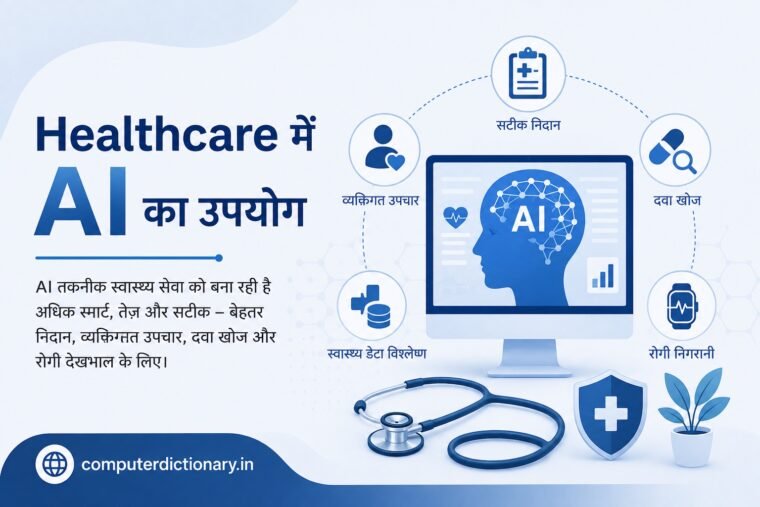
Artificial Intelligence यानी AI आज दुनिया की सबसे महत्वपूर्ण emerging technologies में से एक है। इसका उपयोग smartphones, search engines, automobiles, education, banking और manufacturing से लेकर healthcare तक अनेक क्षेत्रों में किया जा रहा है।
Healthcare ऐसा क्षेत्र है जहाँ बड़ी मात्रा में complex data generate होता है। Medical images, laboratory reports, electronic health records, patient history, medicines से संबंधित information और monitoring devices से प्राप्त data को समझना और सही clinical context में इस्तेमाल करना महत्वपूर्ण होता है।
Artificial Intelligence और Machine Learning जैसी technologies इस data को process और analyse करने में healthcare professionals की सहायता कर सकती हैं।
आज AI-based systems पर medical imaging, clinical decision support, personalized treatment research, Medicine discovery, remote patient monitoring और administrative automation जैसे क्षेत्रों में काम किया जा रहा है।
लेकिन Healthcare में AI क्या है? यह कैसे काम करता है? क्या AI डॉक्टरों की जगह ले सकता है? इसके क्या फायदे और limitations हैं?
आइए विस्तार से समझते हैं।
Table of Contents
Healthcare में Artificial Intelligence क्या है?
Healthcare में Artificial Intelligence (AI) क्या है? उपयोग, फायदे और भविष्य की पूरी जानकारी
Healthcare में Artificial Intelligence का अर्थ ऐसी computer-based technologies और algorithms के उपयोग से है जो medical तथा healthcare data का analysis करके pattern recognition, prediction, classification, automation या decision-support जैसे कार्यों में सहायता कर सकते हैं।
AI-based healthcare systems अलग-अलग प्रकार के data के साथ काम कर सकते हैं, जैसे:
- Medical images
- Laboratory results
- Electronic Health Records
- Patient history
- Genetic data
- Vital signs
- Medical literature
- Monitoring devices से प्राप्त data
AI का उद्देश्य healthcare professionals को available information को अधिक प्रभावी तरीके से process करने में सहायता देना हो सकता है।
यह ध्यान रखना महत्वपूर्ण है कि healthcare में AI को doctor के replacement के रूप में नहीं समझना चाहिए।
AI एक supporting technology है। Diagnosis और treatment जैसे महत्वपूर्ण medical decisions qualified healthcare professionals द्वारा patient की complete clinical condition को ध्यान में रखकर किए जाने चाहिए।
Healthcare में AI को आसान उदाहरण से समझें
मान लीजिए किसी hospital में रोजाना बहुत बड़ी संख्या में medical images तैयार होती हैं।
इन images का analysis trained medical professionals करते हैं।
एक AI-based image analysis system को बड़ी संख्या में appropriately labelled medical images पर train किया जा सकता है ताकि वह images में कुछ predefined patterns पहचानने में सहायता कर सके।
नई image मिलने पर AI model उस image का analysis करके suspicious region को highlight कर सकता है।
लेकिन इसका अर्थ यह नहीं है कि AI ने independently final diagnosis कर दिया।
Doctor या radiologist AI-generated information को patient history, symptoms, laboratory tests और अपनी medical expertise के साथ evaluate करता है।
इस प्रकार AI एक decision-support tool के रूप में काम कर सकता है।
Healthcare में AI कैसे काम करता है?
AI healthcare application के अनुसार अलग-अलग तरीके से काम कर सकता है, लेकिन basic workflow को सरल रूप में इस प्रकार समझ सकते हैं:
Healthcare Data → Data Processing → AI/ML Model → Pattern Analysis → Prediction/Classification → Healthcare Professional Review
1. Data Collection
सबसे पहले relevant healthcare data प्राप्त किया जाता है।
यह data medical records, imaging systems, laboratories, wearable devices या अन्य healthcare systems से आ सकता है।
2. Data Processing
Raw data को AI model के लिए suitable format में prepare किया जाता है।
इसमें data cleaning, standardization और organization जैसे steps शामिल हो सकते हैं।
3. Model Training
Machine Learning model को appropriate training data पर train किया जाता है।
Model data में मौजूद patterns सीखने का प्रयास करता है।
4. Analysis
Trained model नए data का analysis करके predefined task के अनुसार classification, prediction या other output दे सकता है।
5. Human Review
Healthcare applications में model output को clinical context में evaluate करना महत्वपूर्ण है।
Doctors और healthcare professionals patient की complete condition के आधार पर आगे का निर्णय लेते हैं।
Machine Learning की Healthcare में भूमिका
Machine Learning (ML) Artificial Intelligence का एक महत्वपूर्ण क्षेत्र है।
Machine Learning models data में patterns सीख सकते हैं और learned patterns के आधार पर नए data पर predictions या classifications कर सकते हैं।
Healthcare में Machine Learning का संभावित उपयोग:
- Disease risk prediction
- Medical image analysis
- Patient data classification
- Treatment-response research
- Hospital resource planning
- Remote monitoring data analysis
जैसे क्षेत्रों में किया जा सकता है।
उदाहरण के लिए historical patient data का उपयोग करके model कुछ defined clinical outcomes के risk patterns पहचानने का प्रयास कर सकता है।
हालांकि ऐसे predictions को final medical conclusion नहीं माना जाना चाहिए।
Deep Learning और Medical Imaging
Deep Learning Machine Learning से संबंधित एक approach है जिसमें multi-layer neural networks का उपयोग किया जाता है।
Medical imaging AI के सबसे चर्चित applications में से एक है।
Deep Learning models का उपयोग research और कुछ clinical systems में:
- X-ray
- CT Scan
- MRI
- Ultrasound
- Pathology images
- Retinal images
जैसे medical images के analysis में किया जा सकता है।
Models image में specific visual patterns identify करने के लिए train किए जा सकते हैं।
इससे healthcare professionals को images review करने में अतिरिक्त computational assistance मिल सकती है।
Healthcare में AI के प्रमुख उपयोग
Healthcare में Artificial Intelligence का उपयोग कई क्षेत्रों में किया जा सकता है। आपके मूल लेख में diagnosis, personalized treatment, Medicine discovery और patient monitoring को प्रमुख applications के रूप में बताया गया था।
आइए इन्हें विस्तार से समझते हैं।
1. Medical Diagnosis में AI
Medical diagnosis AI का एक महत्वपूर्ण application area है।
AI algorithms patient data में patterns identify करके healthcare professionals को diagnostic process में support कर सकते हैं।
AI systems application के अनुसार:
- Medical images analyse कर सकते हैं
- Laboratory data के patterns identify कर सकते हैं
- Patient history process कर सकते हैं
- Risk-related information provide कर सकते हैं
लेकिन medical diagnosis complex होता है।
एक ही symptom कई diseases से संबंधित हो सकता है और patient की age, history, medicines तथा अन्य clinical factors भी महत्वपूर्ण होते हैं।
इसलिए AI-generated result को qualified medical professional द्वारा interpret करना आवश्यक है।
2. Medical Imaging में AI
Medical imaging में doctors को बहुत बड़ी संख्या में images analyse करनी पड़ सकती हैं।
AI-based image analysis systems images में specific patterns या suspicious regions identify करने में सहायता कर सकते हैं।
उदाहरण के लिए AI tools का अध्ययन:
- Tumor detection
- Fracture detection
- Lung abnormalities
- Eye-related conditions
- Pathology image analysis
जैसे areas में किया गया है।
AI image को scan करके potential abnormality को highlight कर सकता है ताकि specialist उस region पर अतिरिक्त ध्यान दे सके।
इससे AI एक second-reader या support system की तरह उपयोगी हो सकता है, application और regulatory context के अनुसार।
3. Cancer Detection और Research में AI
आपके मूल लेख में medical images में cancer tumors detect करने के लिए AI algorithms के उपयोग का उदाहरण दिया गया था।
Cancer research में AI का उपयोग imaging के अलावा molecular और clinical data analysis में भी किया जा सकता है।
Researchers AI techniques का उपयोग:
- Tumor images analyse करने
- Pathology slides process करने
- Genetic information analyse करने
- Treatment-response patterns study करने
जैसे tasks में कर सकते हैं।
लेकिन cancer diagnosis और treatment high-stakes medical decisions हैं। इसलिए AI output का expert clinical review आवश्यक है।
4. Personalized Treatment में AI
हर patient एक जैसा नहीं होता।
Age, medical history, disease characteristics, lifestyle और genetics जैसे factors treatment response को प्रभावित कर सकते हैं।
AI large datasets का analysis करके यह पहचानने में सहायता कर सकता है कि अलग-अलग patient groups में कौन से patterns दिखाई देते हैं।
इस information का उपयोग personalized या precision medicine research में किया जा सकता है।
इसका उद्देश्य सभी patients के लिए एक ही approach अपनाने के बजाय individual differences को बेहतर तरीके से समझना है।
हालांकि treatment selection हमेशा clinical evidence और qualified healthcare professional की judgment के आधार पर होना चाहिए।
5. Medicine Discovery में Artificial Intelligence
नई medicines विकसित करना complex और resource-intensive process है।
आपके मूल पोस्ट में AI द्वारा genetic data और medical literature analyse करके potential medication targets identify करने की संभावना का उल्लेख किया गया था।
AI Medicine discovery research में:
- Large chemical datasets analyse करने
- Potential medication candidates prioritize करने
- Molecular properties predict करने
- Existing scientific literature process करने
- Biological targets के बारे में hypotheses generate करने
जैसे tasks में researchers की सहायता कर सकता है।
इससे early-stage research के कुछ steps अधिक efficient हो सकते हैं।
लेकिन AI द्वारा suggested molecule सीधे medicine नहीं बन जाता।
नई Medicine को laboratory research, preclinical studies, clinical trials और regulatory approval जैसे extensive stages से गुजरना पड़ता है।
6. Remote Patient Monitoring
Healthcare में AI का एक अन्य महत्वपूर्ण application Remote Patient Monitoring है।
Wearable devices और connected medical devices patient के कुछ health parameters collect कर सकते हैं।
इनमें application के अनुसार शामिल हो सकते हैं:
- Heart rate
- Activity
- Blood pressure
- Oxygen-related measurements
- अन्य physiological data
AI systems continuous data में unusual patterns identify करने में सहायता कर सकते हैं।
इससे healthcare professionals को कुछ situations में patient की condition remotely monitor करने में मदद मिल सकती है।
लेकिन consumer wearable device और certified medical device एक ही चीज नहीं हैं। Medical decisions के लिए appropriately validated systems और professional interpretation आवश्यक हैं।
7. Early Warning Systems
Hospitals में patients की condition समय के साथ बदल सकती है।
AI-based systems available clinical data का analysis करके deterioration से संबंधित patterns identify करने का प्रयास कर सकते हैं।
ऐसे systems healthcare teams को alert दे सकते हैं कि किसी patient को additional assessment की आवश्यकता हो सकती है।
यह doctors और nurses को replace नहीं करता, बल्कि potential risk को prioritize करने में सहायता कर सकता है।
8. Electronic Health Records में AI
Hospitals और clinics में बड़ी मात्रा में patient information Electronic Health Records (EHR) में stored हो सकती है।
इन records में:
- Medical history
- Diagnoses
- Test reports
- Medicines
- Procedures
- Clinical notes
जैसी information शामिल हो सकती है।
AI और Natural Language Processing techniques clinical documentation को organize, search और summarize करने जैसे tasks में सहायता कर सकती हैं।
इससे healthcare professionals को relevant information जल्दी प्राप्त करने में मदद मिल सकती है।
9. Natural Language Processing in Healthcare
Natural Language Processing (NLP) AI का वह क्षेत्र है जो human language को computational तरीके से process करने पर केंद्रित है।
Healthcare में बहुत सी useful information unstructured text के रूप में होती है।
उदाहरण:
- Doctor notes
- Discharge summaries
- Medical reports
- Research papers
NLP tools इस text को process करके relevant information extract या summarize करने में सहायता कर सकते हैं।
लेकिन clinical text की complexity के कारण human verification महत्वपूर्ण है।
10. Virtual Health Assistants और Chatbots
AI-powered chatbots और virtual assistants healthcare-related administrative तथा informational tasks में उपयोग किए जा सकते हैं।
उदाहरण के लिए:
- Appointment information
- General health education
- Medication reminders
- Hospital navigation
- Frequently asked questions
हालांकि chatbot को emergency diagnosis या professional medical advice का replacement नहीं समझना चाहिए।
Serious symptoms या emergencies में users को qualified healthcare professionals और appropriate emergency services से संपर्क करना चाहिए।
11. Robotic Surgery और AI
Modern surgery में robotic systems का उपयोग कुछ procedures में surgeons की सहायता के लिए किया जाता है।
AI और robotics future surgical systems में imaging, planning और data analysis जैसी capabilities को support कर सकते हैं।
लेकिन robotic surgery का अर्थ autonomous robot द्वारा independently operation करना नहीं है।
Clinical robotic systems trained surgeons द्वारा controlled और supervised होते हैं।
12. Hospital Management में AI
Healthcare में AI केवल diagnosis और treatment तक सीमित नहीं है।
Hospital operations में भी AI और data analytics उपयोगी हो सकते हैं।
इनका उपयोग:
- Appointment scheduling
- Bed management
- Staff planning
- Inventory management
- Patient flow analysis
- Administrative automation
जैसे tasks में किया जा सकता है।
इससे healthcare organizations operational efficiency improve करने का प्रयास कर सकते हैं।
13. Medical Research में AI
Medical research में enormous datasets generate होते हैं।
AI researchers को:
- Scientific literature analyse करने
- Genomic data process करने
- Clinical datasets में patterns identify करने
- Research hypotheses generate करने
- Patient subgroups identify करने
में सहायता कर सकता है।
इससे researchers large-scale biomedical data को अधिक efficiently explore कर सकते हैं।
Healthcare में AI के फायदे
Healthcare में Artificial Intelligence के कई संभावित लाभ हैं।
1. बड़ी मात्रा में Data Analysis
AI systems बड़ी मात्रा में structured और unstructured data को process करने में सहायता कर सकते हैं।
2. Pattern Recognition
Machine Learning models complex datasets में ऐसे patterns identify कर सकते हैं जिन्हें manually analyse करना कठिन हो सकता है।
3. Healthcare Professionals को Support
AI repetitive analysis और information-processing tasks में doctors और healthcare staff की सहायता कर सकता है।
4. Personalized Care Research
Patient differences को analyse करके personalized treatment approaches पर research को support किया जा सकता है।
5. Remote Monitoring
Connected devices और AI के combination से कुछ patients की remote monitoring संभव हो सकती है।
6. Operational Efficiency
Scheduling, documentation और resource planning जैसे administrative tasks में automation efficiency बढ़ा सकती है।
7. Medicine Research
AI potential Medication candidates और biological targets को analyse करने में researchers की सहायता कर सकता है।
Healthcare में AI की चुनौतियाँ
Healthcare high-stakes field है, इसलिए AI implementation के साथ कई महत्वपूर्ण challenges जुड़े हैं।
1. Patient Data Privacy
Healthcare data अत्यंत sensitive होता है।
Medical records में व्यक्ति की health history, test results और दूसरी personal information हो सकती है।
इसलिए AI systems में strong data privacy और access-control mechanisms आवश्यक हैं।
2. Data Security
Healthcare databases cyber attacks का target बन सकते हैं।
AI systems के लिए इस्तेमाल होने वाले data को:
- Secure storage
- Encryption
- Authentication
- Access control
- Security monitoring
जैसी practices से protect करना महत्वपूर्ण है।
3. Bias in AI
AI model training data से सीखता है।
यदि training dataset किसी population को adequately represent नहीं करता, तो model performance अलग-अलग patient groups में unequal हो सकती है।
Healthcare में bias serious consequences पैदा कर सकता है।
इसलिए models को diverse datasets पर evaluate करना महत्वपूर्ण है।
4. गलत Prediction
AI system हमेशा सही नहीं होता।
यह false positive या false negative results दे सकता है।
उदाहरण के लिए system किसी abnormality को incorrectly identify कर सकता है या existing problem को miss कर सकता है।
इसीलिए AI output का professional review आवश्यक है।
5. Explainability
कुछ complex AI models का decision-making process आसानी से explain नहीं किया जा सकता।
Healthcare में यह महत्वपूर्ण है क्योंकि doctors को समझना पड़ सकता है कि system ने किसी result को क्यों suggest किया।
Explainable और transparent AI पर research इसलिए महत्वपूर्ण है।
6. Regulation
Medical AI systems का clinical use appropriate regulatory standards और validation requirements के अधीन हो सकता है।
हर AI application clinical use के लिए approved या suitable नहीं होता।
7. Human Oversight
Healthcare में AI का responsible use human oversight के साथ होना चाहिए।
Doctors, nurses और other healthcare professionals की expertise patient care में महत्वपूर्ण बनी रहती है।
क्या AI Doctors की जगह ले सकता है?
यह Healthcare AI से जुड़ा सबसे सामान्य प्रश्न है।
वर्तमान दृष्टिकोण से AI को doctor का replacement समझना उचित नहीं है।
AI कुछ specific tasks में बहुत उपयोगी हो सकता है, जैसे:
- Data analysis
- Image pattern recognition
- Documentation assistance
- Risk prediction
- Research support
लेकिन doctor का काम केवल data analyse करना नहीं है।
Doctors को:
- Patient से communication
- Physical examination
- Clinical context
- Medical history
- Ethical considerations
- Treatment risks
- Patient preferences
जैसे अनेक factors को समझना पड़ता है।
इसलिए healthcare का अधिक practical future Doctor + AI Collaboration हो सकता है।
AI information processing और decision support में सहायता करे और final clinical responsibility trained professionals के पास रहे।
Healthcare में AI और Human Intelligence
Artificial Intelligence और human intelligence की strengths अलग-अलग हैं।
AI की strength:
- Large-scale data processing
- Pattern recognition
- Repetitive tasks
- Computational speed
Human healthcare professionals की strength:
- Clinical judgment
- Empathy
- Communication
- Context understanding
- Ethical decision-making
- Responsibility
इन दोनों का उचित combination healthcare systems को अधिक effective बनाने में मदद कर सकता है।
Healthcare में AI का भविष्य
Artificial Intelligence का healthcare में उपयोग आगे और बढ़ सकता है।
Future applications में development संभावित रूप से निम्न क्षेत्रों में जारी रह सकता है:
- More advanced medical imaging
- Precision medicine
- Genomics analysis
- Medicine discovery
- Remote monitoring
- Clinical documentation
- Hospital automation
- Predictive analytics
- Medical research
AI systems future में healthcare professionals को complex information को तेजी से process करने में और अधिक सहायता कर सकते हैं।
लेकिन technology के साथ responsible implementation भी उतना ही महत्वपूर्ण होगा।
Healthcare AI का future केवल powerful algorithms पर निर्भर नहीं करेगा।
इसके लिए आवश्यक होंगे:
- High-quality data
- Clinical validation
- Patient privacy
- Security
- Fairness
- Transparency
- Regulation
- Human oversight
इन सभी factors के combination से ही AI का healthcare में सुरक्षित और उपयोगी implementation संभव होगा।
Healthcare AI से जुड़े महत्वपूर्ण Terms
Artificial Intelligence (AI): ऐसी computational technologies का व्यापक क्षेत्र जो intelligent tasks perform करने के लिए विकसित की जाती हैं।
Machine Learning (ML): Data से patterns सीखने वाली computational techniques।
Deep Learning: Multi-layer neural networks पर आधारित Machine Learning approach।
Medical Imaging: शरीर की internal structures की diagnostic images तैयार करने की technologies।
NLP: Natural Language Processing, human language के computational processing का field।
EHR: Electronic Health Record, patient की digital health information।
Remote Patient Monitoring: Patient के health-related data को remote location से monitor करने की approach।
Predictive Analytics: Data के आधार पर संभावित future outcomes का अनुमान लगाने की techniques।
Precision Medicine: Individual patient differences को ध्यान में रखने वाली healthcare approach।
हमारे ब्लॉग पर इस से जुड़े अन्य पोस्ट:
संबंधित उत्पाद:
PHYSIOTREX® Professional Ultrasound/Ultrasonic with TENS Machine for Physiotherapy
अक्सर पूछे जाने वाले प्रश्न – FAQ
Healthcare में AI क्या है?
Healthcare में AI का अर्थ medical और healthcare data का analysis करने तथा diagnosis support, prediction, monitoring, research और automation जैसे tasks में सहायता करने वाली Artificial Intelligence technologies से है।
Healthcare में AI का उपयोग कहाँ होता है?
AI का उपयोग medical imaging, clinical decision support, personalized medicine research, Medicine discovery, remote monitoring, medical research और hospital administration जैसे क्षेत्रों में किया जा सकता है।
Medical Diagnosis में AI कैसे मदद करता है?
AI patient data और medical images में predefined patterns identify करके healthcare professionals को additional information या decision support प्रदान कर सकता है।
क्या AI Cancer का पता लगा सकता है?
कुछ AI systems specific medical images या pathology data में cancer-related patterns identify करने के लिए विकसित और studied किए गए हैं। लेकिन final cancer diagnosis qualified medical professionals द्वारा appropriate clinical testing और evaluation के आधार पर किया जाना चाहिए।
Medicine Discovery में AI का क्या उपयोग है?
AI large chemical, genetic और scientific datasets का analysis करके potential medication targets और candidate molecules identify या prioritize करने में researchers की सहायता कर सकता है।
Remote Patient Monitoring क्या है?
Remote Patient Monitoring में connected devices की मदद से patient के कुछ health parameters को दूर से monitor किया जाता है। AI collected data में unusual patterns identify करने में सहायता कर सकता है।
Healthcare में AI के क्या फायदे हैं?
AI के प्रमुख संभावित फायदे large-scale data analysis, pattern recognition, healthcare professionals को support, remote monitoring, administrative automation और medical research assistance हैं।
Healthcare में AI के नुकसान क्या हैं?
मुख्य challenges patient privacy, cybersecurity, AI bias, गलत predictions, explainability, regulatory requirements और human oversight से संबंधित हैं।
क्या AI डॉक्टरों की जगह ले लेगा?
AI को doctors का replacement नहीं, बल्कि healthcare professionals की सहायता करने वाली technology के रूप में देखना अधिक उचित है। Final clinical decisions में trained professionals की भूमिका महत्वपूर्ण रहती है।
Healthcare में AI का भविष्य क्या है?
भविष्य में AI medical imaging, precision medicine, genomics, Medicine discovery, remote monitoring, predictive analytics और healthcare administration में अधिक महत्वपूर्ण भूमिका निभा सकता है।
निष्कर्ष
Healthcare में Artificial Intelligence (AI) modern medical technology के सबसे महत्वपूर्ण developing areas में से एक है।
AI और Machine Learning systems बड़ी मात्रा में healthcare data को analyse करके pattern recognition, prediction, classification और automation जैसे tasks में healthcare professionals की सहायता कर सकते हैं।
आज AI का उपयोग या research medical diagnosis support, medical imaging, personalized treatment, Medicine discovery, remote patient monitoring, hospital management और medical research जैसे क्षेत्रों में किया जा रहा है।
इसके संभावित फायदे महत्वपूर्ण हैं। AI healthcare professionals को large datasets process करने, repetitive tasks automate करने और relevant information जल्दी identify करने में मदद कर सकता है।
लेकिन Healthcare में AI के साथ patient privacy, cybersecurity, bias, गलत predictions, explainability और regulation जैसी गंभीर चुनौतियाँ भी जुड़ी हैं।
सबसे महत्वपूर्ण बात यह है कि AI को human doctors और healthcare professionals के replacement के रूप में नहीं देखा जाना चाहिए।
AI की computational capabilities और doctors की clinical expertise, judgment, communication और empathy एक-दूसरे की complementary strengths हो सकती हैं।
इसलिए Healthcare में Artificial Intelligence का भविष्य संभवतः Human + AI Collaboration पर आधारित होगा—जहाँ technology healthcare professionals को बेहतर information और tools उपलब्ध कराए और महत्वपूर्ण medical decisions योग्य professionals की निगरानी और clinical judgment के साथ लिए जाएँ।
